
Emergency Management of Asthma in the Community
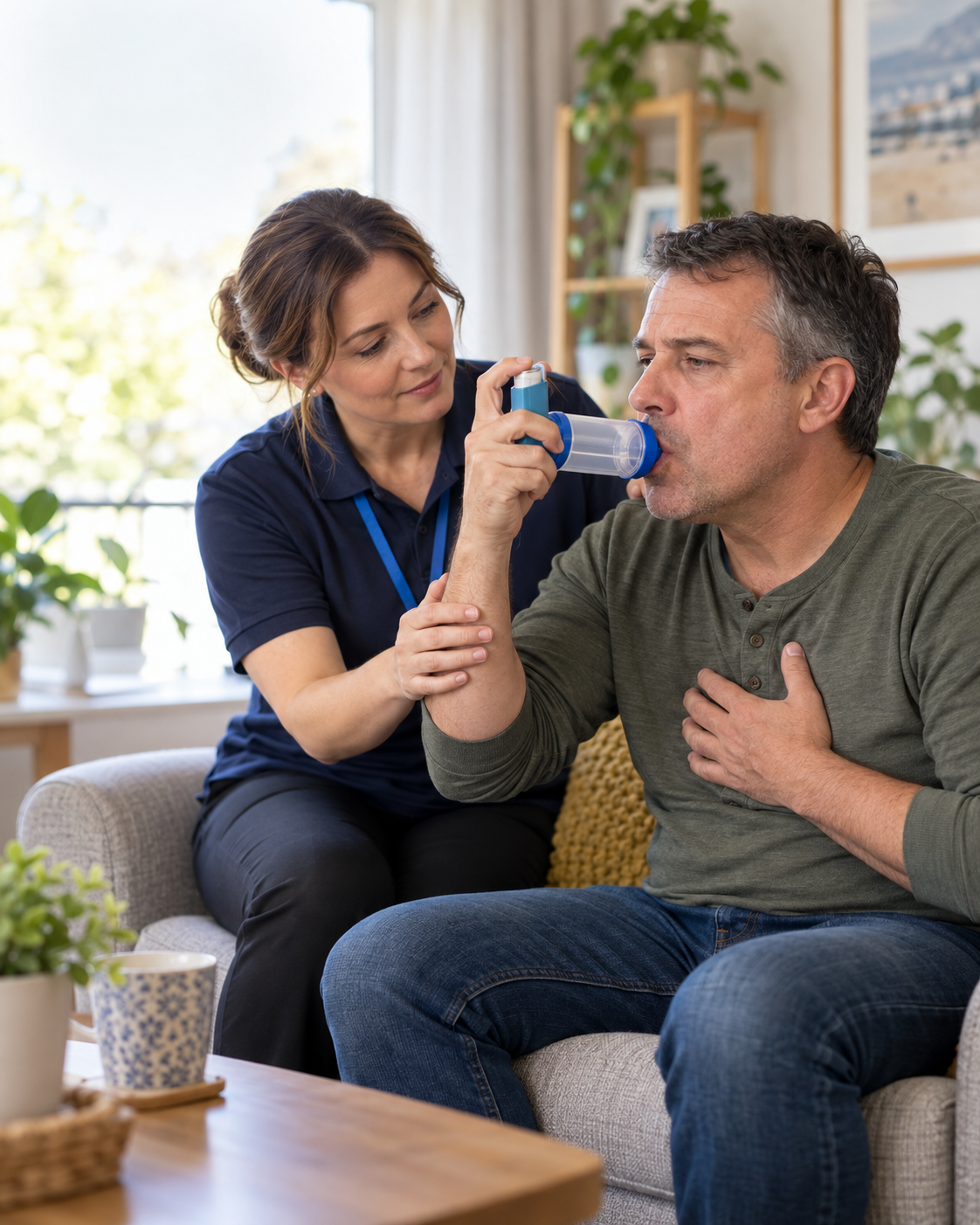
Asthma attacks can develop quickly and may become life-threatening without prompt, effective action. Our Emergency Management of an Asthma Attack in the Community course gives care, support, education and community-based staff the practical knowledge to recognise an acute asthma attack, respond safely, support the use of prescribed reliever medication and know when to call 999.

The course reflects current UK asthma emergency practice and covers both traditional blue reliever inhalers and newer AIR and MART inhalers. Learners also explore the importance of individual asthma action plans, correct inhaler and spacer use, monitoring the person’s response and recognising when symptoms are not improving or are becoming more severe.

Course Overview

This practical asthma emergency training course is designed for staff who may need to support an adult or child experiencing an asthma attack outside hospital. It focuses on recognition, immediate first aid, reliever treatment, escalation and safe decision-making, using realistic community-based scenarios to help learners understand what to look for, what to do and when emergency assistance is required.

Course Content:

1. Introduction to Asthma
  • What asthma is and how it affects the airways

  • Common symptoms and triggers

  • How everyday asthma symptoms differ from an acute asthma attack

  • The role of individual asthma action plans


2. Recognising an Asthma Attack
  • Increasing breathlessness, coughing, wheezing and chest tightness

  • Difficulty speaking, walking or completing usual activities

  • Reduced response to reliever treatment

  • Signs of deterioration and severe asthma

  • Why absence of wheeze does not always mean the attack is mild


3. Immediate Emergency Management
  • Reassuring the person and helping them sit upright

  • Supporting access to prescribed reliever treatment

  • Monitoring breathing, response and deterioration

  • Following the individual asthma action plan

  • Knowing when urgent escalation is required


4. Reliever Inhalers, AIR, MART and Spacers
  • Blue reliever inhalers

  • AIR and MART inhalers

  • Supporting correct inhaler technique

  • Use of spacers where appropriate

  • Following prescribed emergency instructions

  • Recognising when treatment is not working


5. Escalation and calling 999
  • When an asthma attack becomes a medical emergency

  • When to call 999

  • What information to provide to emergency services

  • Supporting the person while waiting for an ambulance

  • Recognising worsening symptoms and further deterioration


6. Practical Scenarios and Post-Attack Actions
  • Applying emergency asthma knowledge to realistic situations

  • Making safe decisions under pressure

  • Avoiding common mistakes

  • Communicating clearly during an emergency

  • Recording and reporting the incident

  • Understanding the need for clinical follow-up after an asthma attack


Course Features

Engaging Multimedia Content: Practical scenarios, discussion, decision-making activities and formative questions help learners apply asthma emergency knowledge to real situations.
Flexibility and Accessibility: Participants can access the course materials at their convenience, allowing for self-paced learning that fits seamlessly into busy schedules. Training can be adapted for care, education, supported living, community services and other settings where staff may need to respond to an asthma attack.
Expert Instruction: Clinically informed training focused on current UK asthma emergency practice, safe escalation and practical application within the learner’s role.
Certificate of Completion: Learners who successfully complete the course receive a Guardian Angels Training certificate of completion to support CPD and organisational training records.

Who Should Take This Course

This asthma attack training course is suitable for anyone who may need to recognise and respond to an asthma emergency in the community, including:

  • Care and support workers

  • Healthcare assistants

  • Personal assistants

  • Domiciliary care staff

  • Supported-living teams

  • Residential and nursing care staff

  • School, college and nursery staff

  • Community and day-service teams

  • First aiders

  • Managers and team leaders

  • Staff supporting adults or children with asthma


Why Choose Us

 Practical and Relevant
Training focuses on what staff may actually need to recognise, decide and do during an asthma emergency.

 Quality Focused
Our courses are designed around clear learning outcomes, clinical safety, effective teaching and practical assessment.

 Commitment to Professional Development and Patient Safety
Our training focuses on best practice, compliance, and patient-centred care. By completing this course, learners not only meet professional requirements but also strengthen their ability to deliver safe, effective, and compassionate emergency care.

Enrolment Details

  • Course Duration: Approximately 1 to 2 hours
  • Access Period: 30 days from the date of enrolment
  • Certification: Upon successful completion, you will receive a certificate valid for 1 year

Enrol Today

Advance your clinical skills with our Emergency Management of Asthma in the Community e-learning course. This essential course builds confidence in recognising symptoms quickly, delivering life-saving interventions, and support with inhaler treatment. Enrol today to strengthen your emergency response skills, enhance patient safety, and ensure best practice in line with national clinical guidelines.